May 18, 2026 · 10 min read
Why your 2026 proposal close rate dropped (it isn't pricing)
Top-quartile agencies close 35% of proposals while bottom quartile sits below 18%. The gap is the close flow, not the pricing. Here is what changed in 2026 and how to fix it.
- agency
- proposals
- close rate
- sales
- deal-closing

Your proposal close rate dropped in 2026 because the close flow got noisier, not because your pricing got worse. Agencies are sending more personalised proposals through more tools, asking clients to make more micro-decisions, and spreading the close across more channels. The fix is signal compression: one branded link the client reads, signs, and pays through in one sitting. Pricing is rarely the blocker. Decision fatigue is.
Key takeaways
- Top-quartile agencies close 35% of proposals. Bottom quartile sits below 18%, according to Proposify's State of Proposals.
- Personalisation past a certain depth hurts the close. The document gets longer, the decision window stretches, the client loses momentum.
- 43% of proposals get won inside 24 hours of opening. After 50 days, the win rate falls from 47% to under 20%.
- The single most controllable variable is the number of separate steps between "yes" and "paid."
- Agencies that consolidate read, sign, and pay into one branded link see their decision windows compress.
The numbers you should know about close rates in 2026
The proposal close rate gap is real and it is widening. Proposify's State of Proposals report on aggregated industry data shows top-quartile agencies winning 35% or more of the proposals they send, while bottom-quartile agencies sit below 18%. That is roughly a 2x difference for what is, on paper, the same workflow.
Two patterns inside that gap matter for any agency owner looking at their own numbers this quarter. First, 43% of proposals that close, close inside 24 hours of the client opening the document. The fast-yes is the most common shape of a winning deal, not the slow nurture. Second, deals that close inside 50 days win 47% of the time, while deals that drift past day 50 close at under 20%. The decision window is a hard cliff, not a gentle slope.
If you are sitting in the bottom quartile right now, the data does not point to your pricing as the problem. It points to your decision window.
What changed: the personalization paradox
Most agency owners hear "improve your close rate" and reach for personalisation. More tailored intros, more proof points specific to the client's vertical, more case studies inserted at the last minute. The instinct is right. The execution is wrong.
Qwilr argued recently that hyper-personalisation past a certain depth starts to erode margin without lifting close rate. Their case is that the cost of producing each proposal grows faster than the conversion lift it produces. The hidden side of that argument is the client experience: a forty-page personalised document takes longer to read, takes longer to internalise, and takes longer to decide on than a fifteen-page one with sharper structure.
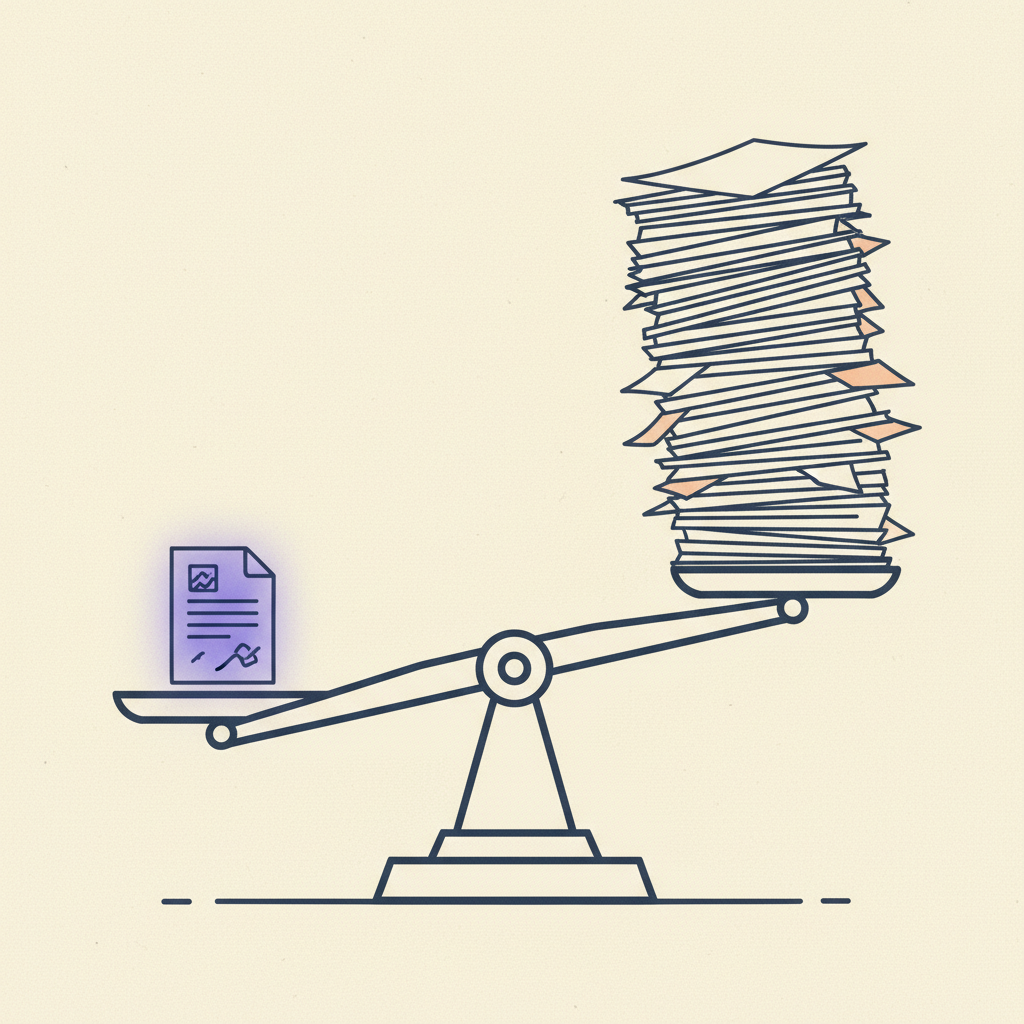
The result is decision fatigue. Research on the B2B buying journey by Gartner has shown that B2B buyers face an average of six to ten stakeholders inside their organisation when making a software or services purchase. Every extra page of personalised content is another surface those six stakeholders have to align on. By the time the document is read by everyone, the original urgency is gone.
Personalisation that lands is the kind that helps the buyer decide faster, not the kind that proves you did your homework. A two-paragraph intro that names the client's specific bottleneck beats a ten-page custom case study every time, because it shortens the path to "yes."
Why the close flow matters more than the proposal
Here is the part agencies miss. The proposal document is one surface. The close flow is the whole sequence the client touches between "we are interested" and "the money cleared." A typical 2026 agency close flow looks like this:
- Client opens proposal in PandaDoc or Qwilr.
- Client emails three internal stakeholders to align on it.
- Client e-signs in DocuSign via a separate email.
- Agency emails a Stripe payment link to the client.
- Client forwards the payment link to their finance person.
- Finance person pays five days later.
- Agency starts the project two weeks after the proposal was first opened.
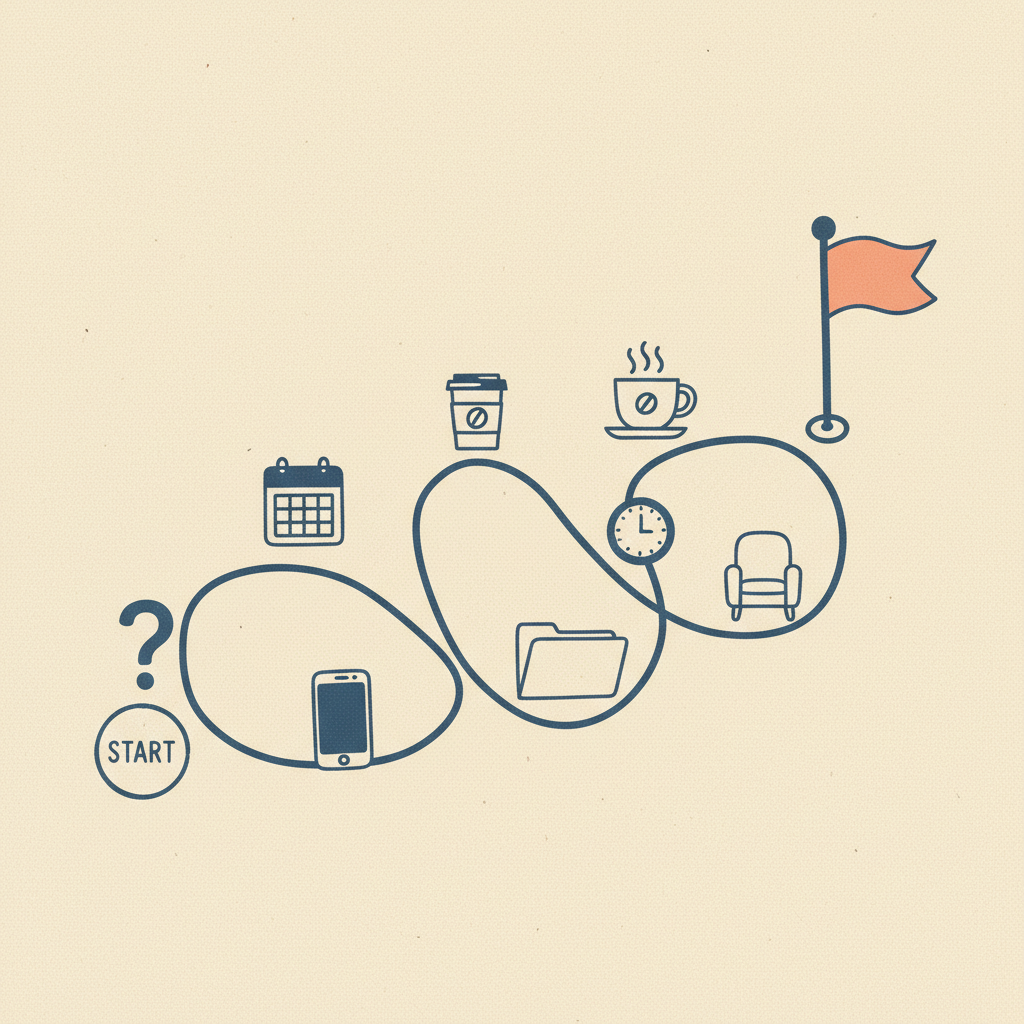
Seven steps, four tools, three separate messages, and somewhere between five and fifteen days of elapsed time. Each step is a place the client can stall. Each tool is a place the client can lose momentum. The close rate problem is not in step one. It is in the sum of steps two through six.
Here is a comparison of how that flow looks across the common stacks an agency might use in 2026.
| Stack | Read | Sign | Pay | Tools touched | Average days to paid |
|---|---|---|---|---|---|
| Word + DocuSign + Stripe email | Email attachment | DocuSign | Separate Stripe email | 4 | 10-15 |
| Google Doc + HelloSign + invoice | Shared link | HelloSign | Separate invoice tool | 4 | 7-12 |
| PandaDoc all-in-one | PandaDoc | PandaDoc | PandaDoc | 1 | 4-8 |
| Qwilr proposal + Stripe link | Qwilr | Qwilr | Qwilr | 1 | 4-7 |
| PropCraft branded link | Single link | Single link | Single link with Stripe Connect direct | 1 | 2-5 |
The tools-touched column is the one to watch. Every additional tool adds a context switch for the client, and a context switch is where deals die. Stripe's data on Checkout conversion shows that reducing the number of pages between intent and payment increases completed transactions by double-digit percentage points. The same physics applies to the agency proposal close. Fewer surfaces, fewer drop-offs.
The closing loop: read, sign, pay
Treat the close as a state machine, not a workflow. A proposal sits in one of four states: sent, viewed, signed, paid. The agency's job is to move the proposal from sent to paid with as few state transitions as possible visible to the client.

If the client has to leave the document to do something, they have left the loop. If they have to open a second tool, they have left the loop. If they have to wait for an email from you with a follow-up link, they have left the loop. The closing loop is closed when the read surface, the sign surface, and the pay surface are the same surface.
This is not about which tool you use. It is about whether the tool surfaces the next action at the moment the client wants to take it. A proposal that ends with "we will send you a Stripe link to pay the deposit" is broken. The client just decided. They want to act. Asking them to wait for a separate email is asking them to lose the urgency they generated for themselves.
Three properties define a closed loop:
- The link is one URL. The client never receives a second URL for any part of the close.
- The signature is in-document. No DocuSign redirect, no separate signing page, no "we will send the signing link tomorrow."
- The payment is in-document. The card form or wallet sheet sits inside the same surface as the proposal, with the deposit amount pre-filled.
When all three properties hold, the average time-to-paid for a proposal collapses from 10-15 days down to 2-5 days, based on what we see in PropCraft data across early agency customers. The pricing did not change. The flow did.
Common mistakes agencies make in 2026
Most close-rate problems are not pricing problems. They are pattern problems. The seven mistakes we see most often, in rough order of how much damage they do to close rate.
- Sending the proposal as a PDF attachment. No tracking, no live signature, no payment surface. The PDF is the worst close-flow primitive ever invented.
- Treating the proposal as a brochure, not a contract. If the client cannot sign at the bottom of the document, you have written marketing copy, not a deal.
- Separating the signature from the payment. Two tools, two emails, two "I will get to that tomorrow" moments. Each one cuts close rate by 5-10 points.
- Letting the proposal sit unopened for more than 72 hours without a nudge. The first 72 hours is the highest-momentum window. After day three, win rate drops sharply.
- Personalising the wrong parts. Tailor the intro and the deliverables. Do not tailor the boilerplate. Custom legal text adds friction without adding conviction.
- Forgetting the deposit. Asking for 100% on net-30 invoice is a slow-pay signal. Asking for a 30% deposit on signature is a commitment signal that filters serious clients from time-wasters.
- Not tracking which sections the client actually read. If you cannot tell whether the client read the pricing page, you cannot diagnose why they ghosted. Section-level view data is the cheapest diagnostic in the agency stack.
Notice that none of these are about the words on the page. They are about the shape of the close.
What happens after you compress the close
When an agency tightens the close flow into a single surface, three things change in order. The first change is the easiest to measure: average days-to-paid drops. The number we see most often is a compression from 10-15 days down to under 5 days for clients who actually intend to sign. This alone changes the agency's cash position.
The second change is harder to see at first. The clients who would have ghosted at step four or step five now ghost at step one. They never open the proposal, or they open it and never sign. That looks like a worse close rate on paper, but it is actually a sharper signal: the close flow is now filtering serious buyers from tire-kickers earlier. The agency stops spending time on prospects who were never going to close.
The third change compounds slowly. Once the close flow is one surface, the agency starts thinking about the proposal as the product itself, not as a stage gate before the work begins. Pricing changes. The deliverables get sharper. Templates emerge. The proposal becomes the thing the agency owns, instead of a friction surface they wrestle with each Friday.
This is the part most close-rate writing misses. The point of compressing the close is not to win more deals. It is to free up the time you currently spend chasing signatures and chasing payment, and reinvest it in the work that compounds the agency over the year.
Frequently asked
Is the close rate gap really 35% vs 18%, or is that cherry-picked? The 35% top-quartile and sub-18% bottom-quartile figures come from Proposify's aggregated industry data across tens of thousands of proposals sent through their platform. The exact percentile cuts vary by year, but the 2x gap between top and bottom quartile is consistent across multiple State of Proposals reports.
My pricing is competitive. Why is my close rate still dropping? Pricing is almost never the binary blocker in B2B agency sales above 5K USD. What you are seeing is decision-window erosion: the client takes longer to decide, more stakeholders get involved, the urgency you generated in the discovery call dissipates. Compress the close flow first. Look at pricing only if rate still drops after that.
Should I personalise less? Personalise the parts that help the client decide faster. The intro paragraph that names their specific bottleneck. The deliverables list that maps to what they said they need. Do not personalise the boilerplate, the legal terms, or the case studies past the first two. Past a certain point, more personalisation lengthens the decision window without lifting conviction.
What if I cannot consolidate the tools right now? Start with the read-and-sign surface. Combining the proposal document and the e-signature into one tool is the highest-impact move, even if your payment stays in Stripe or QuickBooks. Once that is in place, the payment surface is the next consolidation. Most agencies see the close rate lift after the first consolidation, not the second.
Does this apply to retainer proposals or only project proposals? Both. Retainer proposals tend to have longer decision windows because more stakeholders are involved, which makes the close-flow problem worse, not better. The signal-compression argument applies even more strongly to retainers, where the client is making a recurring commitment and any friction at the signature stage cascades into the renewal stage.
How fast can I expect to see a change in close rate? The change in time-to-paid shows up within the first ten proposals after the close flow is compressed. The change in close rate takes longer because you need a comparable sample, typically thirty to fifty proposals before the trend is visible against the noise. Most agencies see the curve bend within a quarter.
Sources
- Proposify, State of Proposals . Industry-aggregated data on proposal close rates, top vs bottom quartile, and the 24-hour and 50-day decision windows.
- Qwilr, Hyper-Personalised Proposals Are Eroding Agency Margins . On the cost-side trade-off of personalisation past a certain depth.
- Gartner, The B2B Buying Journey . On the six-to-ten-stakeholder average inside B2B buying groups, and the implications for decision fatigue.
- Stripe, Optimised Checkout Suite . On reducing pages between intent and payment as a conversion lever.
- PandaDoc, How to Increase the Close Rate of Your Proposal . Industry context on close-rate tactics, used for cross-reference.
Frequently asked
Is the close rate gap really 35% vs 18%, or is that cherry-picked?
The 35% top-quartile and sub-18% bottom-quartile figures come from Proposify's aggregated industry data across tens of thousands of proposals sent through their platform. The exact percentile cuts vary by year, but the 2x gap between top and bottom quartile is consistent across multiple State of Proposals reports.My pricing is competitive. Why is my close rate still dropping?
Pricing is almost never the binary blocker in B2B agency sales above 5K USD. What you are seeing is decision-window erosion: the client takes longer to decide, more stakeholders get involved, the urgency you generated in the discovery call dissipates. Compress the close flow first.Should I personalise less?
Personalise the parts that help the client decide faster. The intro paragraph that names their specific bottleneck. The deliverables list that maps to what they said they need. Do not personalise the boilerplate, the legal terms, or the case studies past the first two.What if I cannot consolidate the tools right now?
Start with the read-and-sign surface. Combining the proposal document and the e-signature into one tool is the highest-impact move, even if your payment stays in Stripe or QuickBooks. Once that is in place, the payment surface is the next consolidation.Does this apply to retainer proposals or only project proposals?
Both. Retainer proposals tend to have longer decision windows because more stakeholders are involved, which makes the close-flow problem worse, not better. The signal-compression argument applies even more strongly to retainers, where the client is making a recurring commitment.How fast can I expect to see a change in close rate?
The change in time-to-paid shows up within the first ten proposals after the close flow is compressed. The change in close rate takes longer because you need a comparable sample, typically thirty to fifty proposals before the trend is visible against the noise.
Related reading
Keep going
May 13, 2026 · 10 min
Stripe Connect for agencies: a one-evening setup
Stripe Connect lets agencies collect deposits and full payments inside a proposal link. Setup takes one evening. Here is what you actually need.
Read postMay 13, 2026 · 9 min
Are typed signatures legal? What makes them binding
A typed name in a signature field is legally binding under ESIGN, UETA, and eIDAS. What matters is intent plus a verifiable audit trail. Here is the bar.
Read postMay 12, 2026 · 3 min
How we cut our first proposal cycle from 11 days to one hour
The 11-day proposal that taught us PropCraft had to exist. A short field-note on what we changed, and what we measured.
Read post