May 13, 2026 · 9 min read · by Agshin
Are typed signatures legal? What makes them binding
A typed name in a signature field is legally binding under ESIGN, UETA, and eIDAS. What matters is intent plus a verifiable audit trail. Here is the bar.
- e-signature
- esign-act
- eidas
- legal
- audit-trail

Yes. Typed signatures are legal and binding under the laws of every major jurisdiction, including the US ESIGN Act, the EU eIDAS regulation, and equivalent legislation across Asia and Latin America. What makes a typed signature legal in court is not the visual style of the mark. It is intent plus a verifiable audit trail. As long as the signer demonstrably agreed to be bound and the platform captured timestamp, identity, and tamper-evidence, the contract holds.
Are typed signatures legal under US, EU, and UK law
The ESIGN Act, signed into US federal law in 2000, says explicitly that a signature, contract, or record cannot be denied legal effect solely because it is in electronic form. The same principle runs through the Uniform Electronic Transactions Act (UETA), adopted by 47 US states plus the District of Columbia. The EU's eIDAS regulation, in force since 2016, makes the same baseline guarantee across all 27 member states.
The legal test is intent. Did the signer mean to sign? Was the action a deliberate consent, not a stray click? Did the platform tie the signature to a specific document and a specific identity? If yes, the signature stands.
What the law does not care about: the visual fidelity of the mark. A typed name, a drawn squiggle, a clicked checkbox, an "I agree" button, a recorded voice clip. All of these are valid electronic signatures when paired with intent and an audit trail. The cursive flourish you grew up with is one form. The other forms are equally binding.
The intent rule
Intent is the single most cited concept in electronic signature law. Courts ask three questions when a typed signature is challenged:
- Was the signer identified? The platform must tie the signature to a specific person, usually via email verification plus IP capture.
- Did the signer act voluntarily? A signature obtained under duress or by mistake is void, electronic or not.
- Did the signer understand the document they were signing? This is why proposal pages display the full content above the signature block, not a separate "click here to accept" link.
A typed signature on a proposal page that meets all three of these passes the intent test in every jurisdiction we have looked at.
ESIGN, UETA, eIDAS: the three frameworks an agency needs to know
Different countries, different frameworks, mostly the same outcome. Here is the comparison.
| Framework | Region | Default tier | Wet signature required for | Audit trail requirement |
|---|---|---|---|---|
| ESIGN Act | United States (federal) | Simple electronic signature | Wills, family law, some real estate transfers | Recommended, not mandated |
| UETA | 47 US states + DC | Simple electronic signature | State-specific exceptions, very narrow | Recommended, not mandated |
| eIDAS | European Union (all 27 member states) | Simple electronic signature | Property transfers, certain employment contracts | Mandated for advanced and qualified tiers |
For agency proposals across the US and EU, the simple electronic signature tier covers nearly every engagement. The exceptions are specific document categories (wills, family law, certain real-estate paperwork) where local law still requires a wet signature or a witnessed signing.

When you might still want a higher tier
eIDAS defines three tiers. Simple (typed name, drawn signature, clicked button). Advanced (cryptographically tied to the signer with strong identity verification). Qualified (advanced, plus issued via a state-accredited certificate authority).
Almost every agency engagement is fine on the simple tier. You only need to climb the ladder when:
- The contract value crosses a threshold where the client's legal team requires it
- The engagement involves an EU public-sector body that mandates qualified signatures
- The client's industry has a regulator (healthcare, banking, government contracting) with its own signature requirements
For a $5,000 website redesign or a $50,000 retainer between two private agencies, simple electronic signatures are the right call. The friction of advanced or qualified tiers is rarely justified by the marginal legal benefit.
What a good audit trail captures
The audit trail is the technical scaffolding that makes a typed signature defensible in court. It is the difference between "I clicked yes" and "I clicked yes at 14:32:07 UTC on October 12 from IP 203.0.113.42 on a MacBook Pro running Safari, after viewing the document for 4 minutes 18 seconds." The second version is hard to dispute.
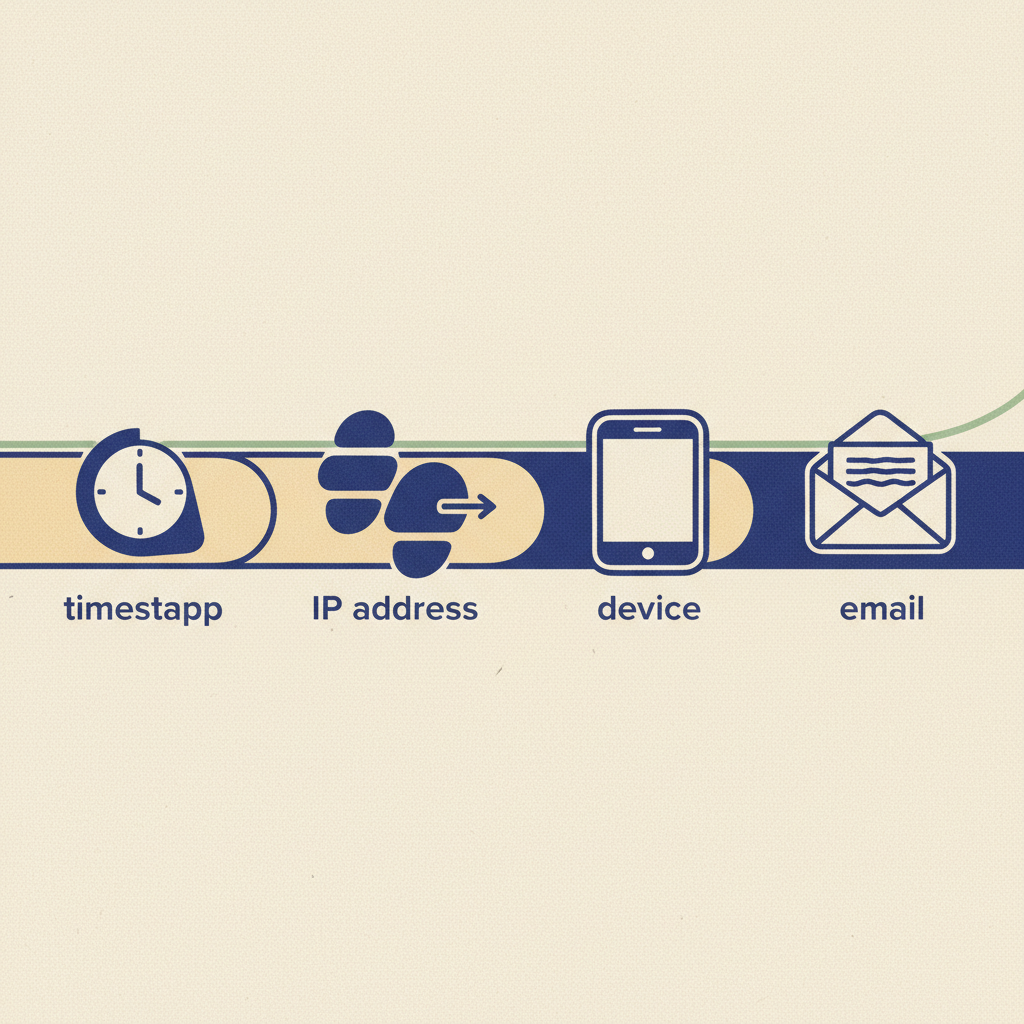
A serious audit trail captures the following for every signing event:
- Signer email: the address that received the proposal link, with delivery confirmation
- Signer name: what they typed into the signature field, verbatim
- Timestamp: down to the second, in UTC, with timezone-aware logging
- IP address: at the moment of signing, captured server-side so it cannot be spoofed client-side
- User agent: the device and browser combination, so a forensics expert can verify the signing environment
- Document hash: a cryptographic fingerprint of the exact document version that was signed, so any post-signing edit is detectable
- Time spent reviewing: when did the signer open the document, and how long was it visible before they signed
The first five are baseline. The last two are what separate "good enough" from "unimpeachable" in front of a judge.
Common mistakes that weaken a signature
Three patterns we see repeatedly when agencies handle signatures themselves outside a proper platform.
The first is sending an attachment for the client to print, sign by hand, scan, and email back. This is not more legally binding than a typed electronic signature. It just adds three steps of friction and produces no audit trail. The wet signature on a scan is no more defensible than a typed name with a proper audit trail. Often it is less defensible because there is no record of when, where, or by whom the printing and scanning happened.
The second is using a generic "I agree to the terms" checkbox without tying it to the specific document the client viewed. If your terms change between when the client clicks and when a dispute arises, you cannot prove which version they agreed to. The fix is to bind the signature to a specific document version, captured as a hash in the audit trail.
The third is failing to verify the signer's email. If anyone can paste a name into a signature field, the signature is worth less. The minimum bar is sending the document via an email link and capturing that the link was opened from a particular email address before the signature event. Better is a one-time code or a magic link that proves the signer controls the inbox.
What happens after the client signs
The moment the signature lands, three things should happen automatically.
The proposal status flips from sent to accepted. The agency gets an in-app notification and an email confirmation. The signer gets a confirmation email with a PDF copy of the signed document attached, including the audit trail as an appendix.
The PDF appendix is the part most agencies overlook. It is the document you hand a lawyer if a dispute arises three years later. It needs to contain:
- The full proposal content the signer viewed
- The signer's typed name as it appeared in the signature field
- The full audit trail: IP, timestamp, user agent, document hash
- A statement that the document was signed electronically under the relevant law (ESIGN, UETA, or eIDAS)
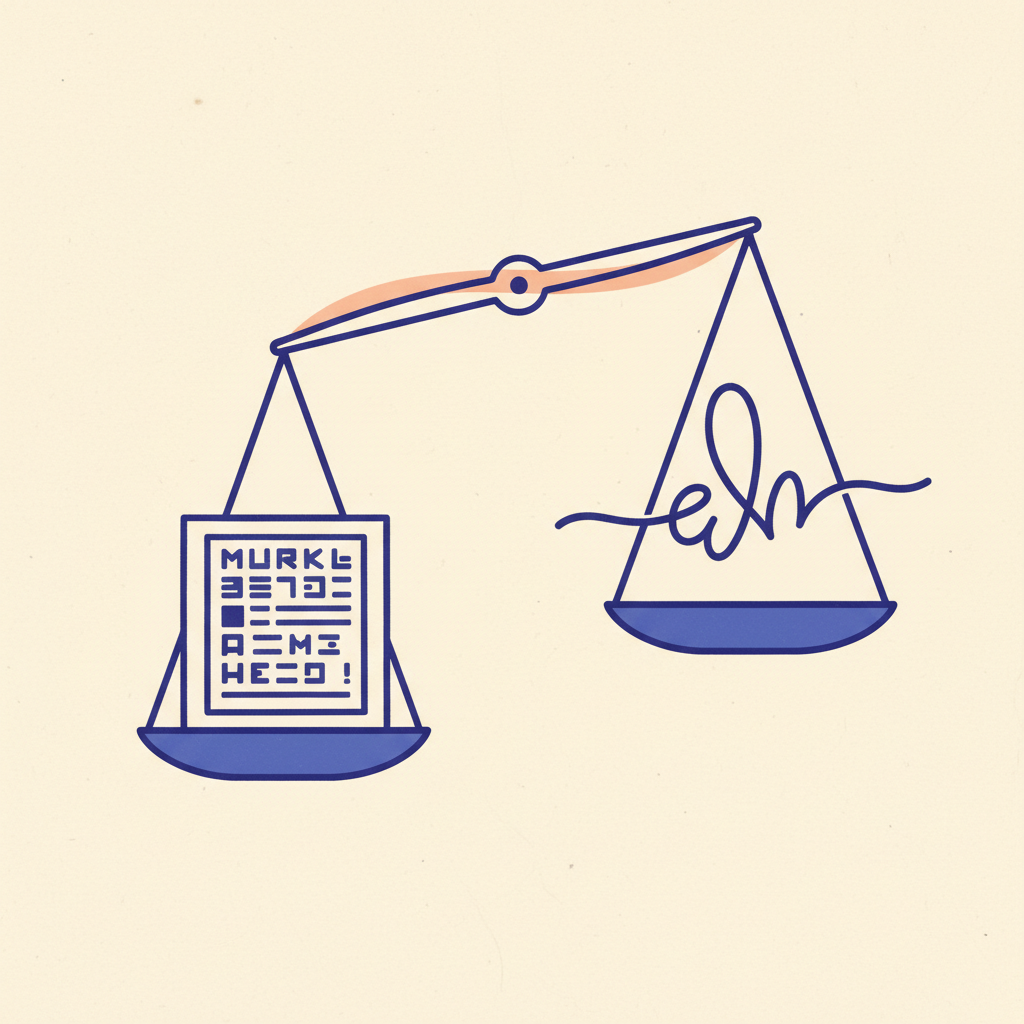
Most disputes that reach court do not turn on whether typed signatures are valid. That is settled law. They turn on whether the platform can produce the audit trail on demand. If your tool emails a signed PDF with the audit trail attached every time, you have the evidence ready before you need it.
What about international clients
Cross-border engagements are where agencies get nervous. The good news is the legal framework is well-aligned across major markets.
A US agency signing with a UK client: ESIGN governs the US side, the UK's Electronic Communications Act 2000 governs the UK side. Both recognise the same simple electronic signature tier, and both treat a typed name with an audit trail as valid.
A UK agency signing with a German client: eIDAS governs both sides. Same simple tier, same audit trail standard, same outcome.
A US agency signing with a Japanese client: Japan's Electronic Signatures Act treats simple electronic signatures as valid, with audit trail. Same outcome.
The pattern: every jurisdiction with a developed electronic commerce framework recognises simple electronic signatures backed by audit trails. The differences are at the advanced and qualified tier, where you rarely need to go for an agency engagement.
For agencies operating across Europe specifically, the EU is rolling out a digital identity wallet by December 2026 that makes qualified electronic signatures as routine as unlocking a phone. This is worth knowing about for future-proofing, but it does not change the validity of simple signatures today.
Frequently asked
Is a typed name legally binding without a witness?
Yes. Neither ESIGN, UETA, nor eIDAS require a witness for ordinary commercial contracts signed electronically. Witnesses are required for specific document categories (some wills, certain affidavits) where local law mandates them, but a typed signature on an agency proposal is binding without one.
Can the client deny they signed?
They can claim it, but proving it is hard when the audit trail captures their email opening the document, their IP address at signing, the timestamp, and the device they used. Courts treat well-documented audit trails as strong evidence of identity. The combination is more defensible than a wet signature on paper, which has none of those capture points.
Does the typed name need to look like a real signature?
No. The visual style is irrelevant. A typed name in a plain text field is as binding as a cursive-font rendering of the same name. The law cares about intent and audit trail, not aesthetics. Some platforms offer a cursive-font display purely to make the signature feel more familiar to the signer.
Do I need a separate e-signature tool, or can my proposal platform handle it?
If the proposal platform captures the audit trail (timestamp, IP, document hash, signer email) and emits a signed PDF with that audit trail attached, you do not need a separate tool. Most modern proposal platforms handle this natively. A separate DocuSign-style tool adds steps and friction without strengthening the signature's legal validity.
Are clicked checkboxes also valid signatures?
Yes, when tied to intent and identity. A clicked "I agree" checkbox at the end of a proposal qualifies as a simple electronic signature under ESIGN, UETA, and eIDAS, as long as the platform captures who clicked it, when, and on which document version. Typed names carry slightly more evidentiary weight because they require an active typing action, but both are valid.
What about retainer renewals signed on a recurring schedule?
Renewals are an interesting edge case. Most jurisdictions accept that signing the original contract grants consent to clearly disclosed automatic renewals, provided the original document spelled out the renewal terms and the auto-renew was not buried. For new renewals at a different rate or with new terms, you should obtain a fresh signature on the updated document.
Frequently asked
Is a typed name legally binding without a witness?
Yes. Neither ESIGN, UETA, nor eIDAS require a witness for ordinary commercial contracts signed electronically. Witnesses are required for specific document categories where local law mandates them, but a typed signature on an agency proposal is binding without one.Can the client deny they signed?
They can claim it, but proving it is hard when the audit trail captures their email opening the document, their IP address, the timestamp, and the device they used. Courts treat well-documented audit trails as strong evidence of identity.Does the typed name need to look like a real signature?
No. The visual style is irrelevant. A typed name in a plain text field is as binding as a cursive-font rendering of the same name. The law cares about intent and audit trail, not aesthetics.Do I need a separate e-signature tool?
If your proposal platform captures the audit trail and emits a signed PDF with that audit trail attached, you do not need a separate tool. Most modern proposal platforms handle this natively without adding friction to the closing flow.Are clicked checkboxes also valid signatures?
Yes, when tied to intent and identity. A clicked I agree checkbox qualifies as a simple electronic signature when the platform captures who clicked it, when, and on which document version. Typed names carry slightly more weight.What about retainer renewals?
Most jurisdictions accept that signing the original contract grants consent to clearly disclosed automatic renewals, provided the renewal terms were spelled out. For renewals at a different rate or with new terms, obtain a fresh signature.
Related reading
Keep going
May 18, 2026 · 10 min
Why your 2026 proposal close rate dropped (it isn't pricing)
Top-quartile agencies close 35% of proposals while bottom quartile sits below 18%. The gap is the close flow, not the pricing. Here is what changed in 2026 and how to fix it.
Read postMay 13, 2026 · 10 min
Stripe Connect for agencies: a one-evening setup
Stripe Connect lets agencies collect deposits and full payments inside a proposal link. Setup takes one evening. Here is what you actually need.
Read postMay 12, 2026 · 3 min
How we cut our first proposal cycle from 11 days to one hour
The 11-day proposal that taught us PropCraft had to exist. A short field-note on what we changed, and what we measured.
Read post